
Dummy Cameras for Home
Our Top Picks for Home Decoy Cameras


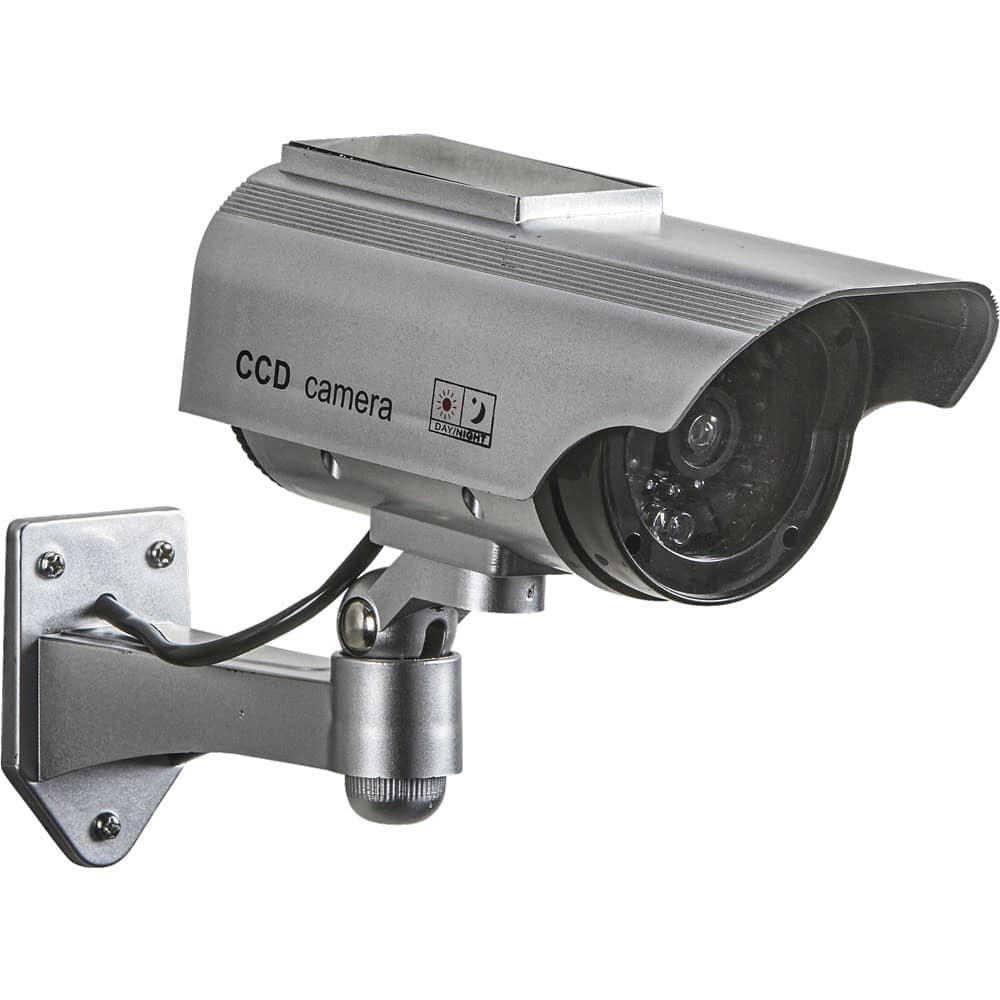

What Makes a Dummy Camera Convincing
Not all fake cameras are created equal. A cheap decoy with obvious hollow housing, a blinking Christmas-light LED, and flimsy mounting tells an experienced intruder exactly what it is. A well-designed dummy camera is built to pass scrutiny at a distance — the distance from which a burglar evaluates a property before deciding whether to approach.
Housing quality is the first test. Our dome cameras use ABS plastic with the same profile, texture, and finish as commercial-grade dome cameras used in retail stores, offices, and hotels. From the street or at normal room distance, the housing is indistinguishable from a functioning unit.
The LED behavior matters. A continuously flashing red LED is the standard visual indicator on most modern security cameras. Both indoor dome models include this feature. The motion-activated solar model takes it a step further — the LED activates when someone enters the detection zone, which is exactly how a real IR camera behaves when it detects motion and illuminates for night vision. That behavioral realism is significantly more convincing than a camera that blinks regardless of whether anyone is present.
The cable detail. Real security cameras have wires. A dummy camera mounted with no visible cable or conduit can look suspicious to someone who knows what security cameras look like. For indoor installs, running a short length of dummy conduit or a coiled cable behind the mount significantly increases realism. This is a small, inexpensive addition that pays dividends in deterrent effect.
Consistent placement with real cameras. The most effective deployment mixes real and dummy cameras. Position real cameras at your most critical entry points. Use dummy cameras to extend perceived surveillance coverage across secondary areas. An intruder sees cameras everywhere and has no way to know which ones are live.
Best Placement for Dummy Cameras Inside the Home
Placement that mimics real security camera logic is more convincing than placement that simply fills a space. Here’s how professional installers think about indoor coverage — and how to replicate it with dummy cameras:
Entry-adjacent walls and ceilings are the highest-value positions. A dome camera mounted 8 to 10 feet high in the corner nearest the front door, rear entry, or sliding glass door signals that anyone entering is captured from the moment they cross the threshold. This is exactly where real cameras go, which is exactly why dummy cameras belong there too.
Living room and main floor coverage is the next priority. One camera positioned to cover the primary pathway through the main floor — typically covering the front door, the stairwell approach, and as much of the living area as possible — creates a strong deterrent for anyone who has made it inside. A dome camera in a ceiling corner gives the widest implied field of view.
Hallways leading to bedrooms and valuables extend the sense of total coverage. A dummy camera at the top of the main stairwell or at the entrance to a bedroom hallway signals that the entire home is monitored, not just the ground floor entry.
Avoid obvious dead angles. Placing a camera that clearly points at a blank wall or a space where nothing of value exists is a tell. Position every camera so it appears to cover something worth protecting.
Using Dummy Cameras as Part of a Layered Security Plan
Dummy cameras work best as one layer of a broader strategy rather than as a standalone solution. Here’s a practical framework for home security on a realistic budget:
Layer 1 — Access control: Deadbolts, reinforced door frames, and window locks. No camera — real or fake — helps if a door can be kicked in easily.
Layer 2 — Real cameras at critical points: One or two functioning cameras covering the primary entry door and any secondary entry that poses real risk. These provide actual evidence if needed.
Layer 3 — Dummy cameras for extended coverage: Deploy dummy dome cameras to create the impression of comprehensive surveillance across interior spaces, secondary entries, and garage access.
Layer 4 — Signage: Warning stickers and security signs (included with the solar models) multiply the deterrent effect of cameras — both real and fake — by creating awareness before anyone enters the property.
Layer 5 — Alarms: A personal alarm, door/window sensor, or monitored system provides the alert function that cameras — real or dummy — cannot.
Frequently Asked Questions
Questions About Coverage or Placement?
If you're putting together a security plan and want help choosing between real and dummy cameras for your layout, call us at 800-859-5566. We're happy to talk through what makes sense for your home.
Shop All Dummy Cameras